
news & Insights
Budget Blueprint: Navigating Louisville Metro’s Fiscal Journey
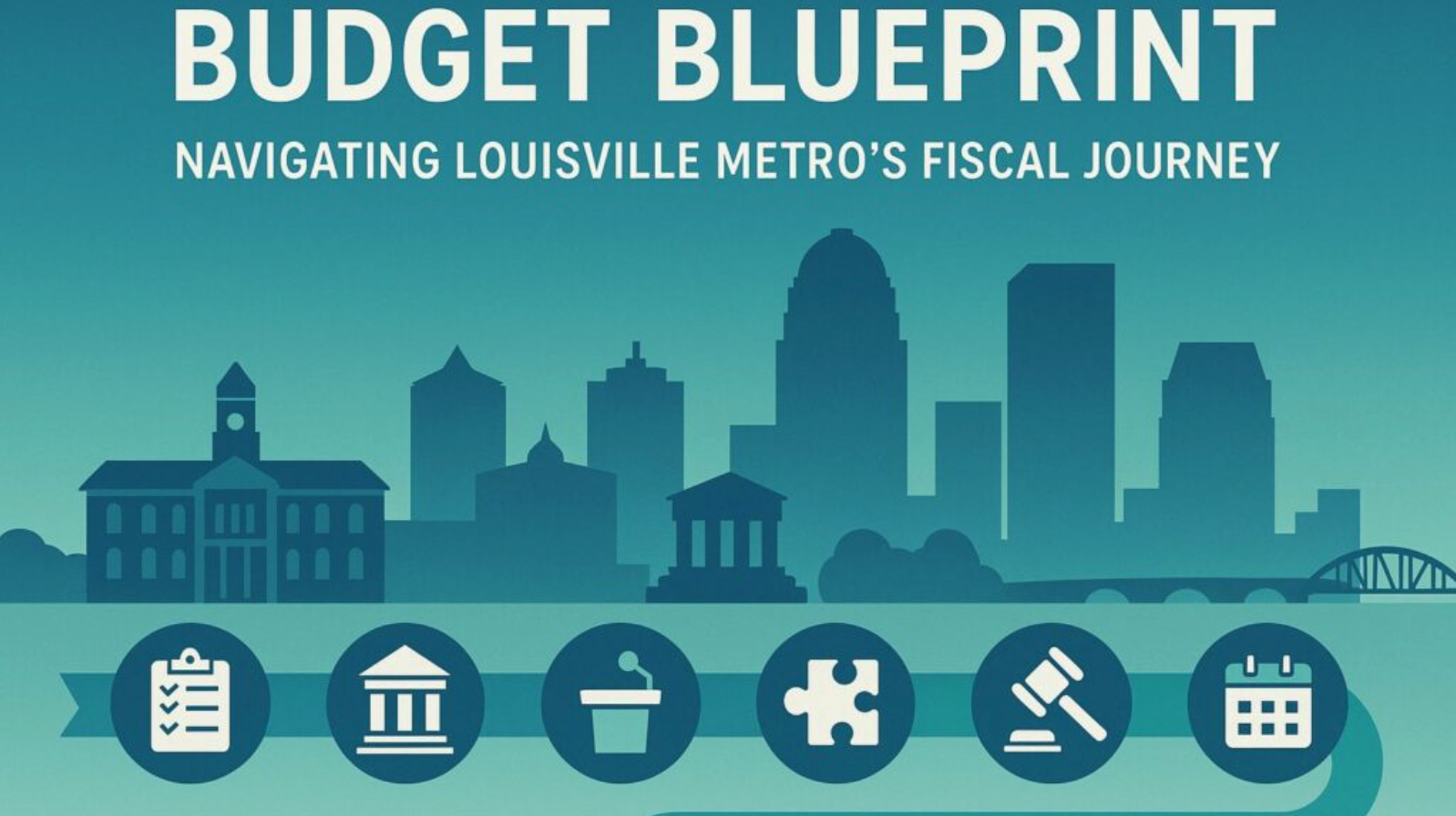
The process for creating and passing a fiscal year budget for Louisville Metro Government involves several key steps, coordinated between the Mayor’s Office, the Office of Management and Budget (OMB), and the Louisville Metro Council. The fiscal year runs from July 1 to June 30. Here’s an overview of the typical process:
1. Departmental Budget Preparation (Fall – Winter)
- Each Metro department and agency begins internal planning for its budget needs.
- Departments submit their funding requests to the Office of Management and Budget (OMB).
- Requests may include new programs, staffing needs, capital projects, or grant needs.
2. Mayor’s Budget Development (Winter – Spring)
- The Mayor’s Office, with OMB, reviews department requests and revenue projections.
- Input may be gathered from community meetings or priority surveys.
- A proposed budget is developed balancing revenue forecasts and spending needs
3. Mayor’s Budget Proposal to Metro Council (Late April – May)
- The Mayor formally presents the proposed budget to the Metro Council by May 1, as required by law.
- The budget includes:
- General Fund allocations
- Capital improvement projects
- External agency funding
- Special revenue and grant funds
4. Metro Council Budget Hearings (May – June)
- The Metro Council Budget Committee (led by the Budget Chair) holds public hearings and departmental reviews.
- Council members ask questions about spending priorities, outcomes, equity, vacancies, etc.
- Community members and organizations may testify about their needs and concerns.
5. Budget Amendments and Deliberations (June)
- Council members can propose amendments, such as shifting funds, adding language, or restoring cuts.
- The Budget Committee votes on a final version, incorporating these amendments.
- Amendments must keep the budget balanced.
6. Final Council Vote (Before June 30)
- The full Metro Council votes on the final budget—typically during the second or third week of June.
- The budget must be passed by June 30 to ensure government operations continue without interruption.
7. Implementation (July 1)
- Once adopted, the budget goes into effect July 1.
- Departments begin executing programs and projects.
- The Office of Management and Budget monitors spending throughout the year.
Additional Notes
- The budget process allows for public input at hearings and through councilmember offices.
- All documents, including the Executive Budget and Detail Budget, are published online.
- Mid-year amendments can be passed for budget adjustments or emergencies
share this



Be Part of
the Story
The stories you’re reading are powered by residents building stronger communities. Donate today and support our residents, plans, and partnerships that make community-led change possible.