Get In Touch

1126 Berry Blvd, Ste 300
Louisville, KY 40215

info@centerforneighborhoods.org

502-589-0343

Mid City Mall: What’s Actually Happening—and What to Watch Next
This post is part of CFN’s Project78 series—spotlighting what’s happening in neighborhoods across Louisville through the lens of experienced, concerned local experts and partners who help communities stay informed and ready to engage.

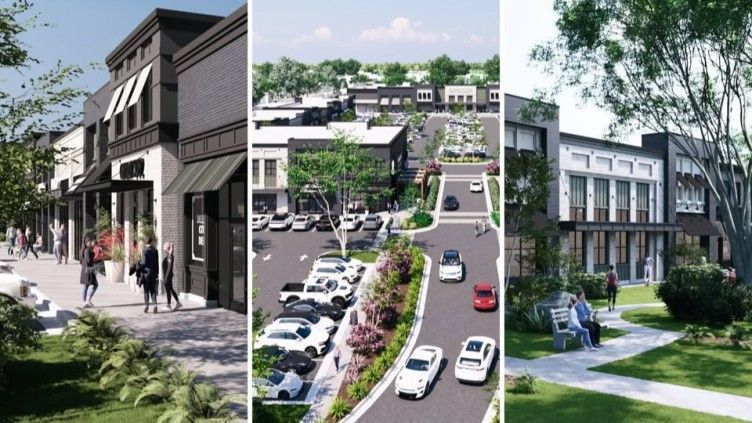
Mid City Mall is in that messy middle phase that drives everyone nuts: big changes feel possible, rumors fill the void, and headlines start treating “uncertainty” like a storyline. But when you strip the noise away, the reality is simpler—and more important: As of early 2026, the public record still shows an early-stage situation, not an approved redevelopment plan.

Louisville doesn’t have a shortage of opinions about development. What we’re missing—too often—is a shared set of facts people can trust before the hot takes harden into “truth.”

That’s why MK Lindsey’s work matters.

MK Lindsey is a self-proclaimed Urbanist Developer + Consultant. Making Good Projects Possible. She’s also an experienced member of the CFN Consultant Network and a citizen journalist who’s done something rare in local development coverage: she followed the paper trail, explained it in plain language, and told people what to watch next.

That’s the core of MK Lindsey’s reporting in her recent Linked In article and update on the issues, and it’s why her coverage has become one of the most useful guides Louisville has right now for understanding what’s really happening at Mid City Mall.

The key point: diligence activity is not a redevelopment plan

In her LinkedIn post responding to the Baxter Avenue Theatres closure narrative, Lindsey breaks down a timeline of Zoning Certification Letter (ZCL) requests connected to Mid City Mall and explains what people keep misreading:

  • A ZCL isn’t a review of plans.
  • A ZCL doesn’t mean a project is moving forward.
  • A ZCL is often a basic diligence step to confirm what zoning would allow—sometimes by a developer, sometimes by an intermediary, sometimes as part of marketing or feasibility work.

The question is: what filings will show up next, and when will public input actually matter?

What Lindsey’s timeline suggests about the near-term reality

Her conclusion is blunt: no redevelopment plan has been presented, and the most likely short-term outcome is that Mid City Mall stays largely as-is, with increasing vacancy through 2026 as existing leases roll off.

That aligns with what she flags as a hard fact in the process: some major tenant leases are scheduled to expire in June 2026. Without a filed project moving through review, vacancy—and the uncertainty that comes with it—becomes the default story.

The January update: more visibility, still early stage

In her January 2026 update, Lindsey reports that Branch Properties shared initial site plans with local neighborhood associations and created public-facing channels (a Facebook page and an email address) for the project. Still, as of January 23, 2026: no deed had been filed showing a sale, and no new plans, review requests, or permits had been submitted to Louisville Metro.

Why the Bardstown Road Overlay process is the real “watch point”

Lindsey’s longer write-up also pulls a spotlight onto the Bardstown Road Overlay District (BROD) process—because if the site is materially changed (new construction, demolition, major exterior changes, changes in use), that process is where design standards and public input become real.

And she’s clear about how the public can engage when that time comes:

  • get connected through neighborhood associations,
  • ensure groups request formal notices,
  • watch for meeting agendas and public notice requirements,
  • show up and comment when hearings are scheduled.

Why this matters for Louisville—not just the Highlands

Mid City Mall isn’t just another real estate deal. It sits at the intersection of some of Louisville’s most sensitive questions:

  • Do we get “suburban-style” redevelopment, or something that fits the corridor?
  • How much space is devoted to parking versus walkability and street life?
  • How will the project affect adjacent neighborhoods and small businesses?
  • What role—if any—do neighbors have before decisions become irreversible?

The site itself also has history that makes these questions feel personal. Lindsey captures that in a way a lot of coverage doesn’t: Mid City Mall has been reinvented before, and neighborhood involvement has been part of that story.

What to watch next

If you want to stay oriented, watch for public record signals that mean the project has moved from “talk and diligence” to “formal review,” such as:

  • a recorded deed confirming a sale,
  • submitted site plans or permit applications,
  • formal BROD filings and public meeting notices,
  • zoning and planning items appearing on Metro agendas.

Join our mission to build great neighborhoods

Donate Now